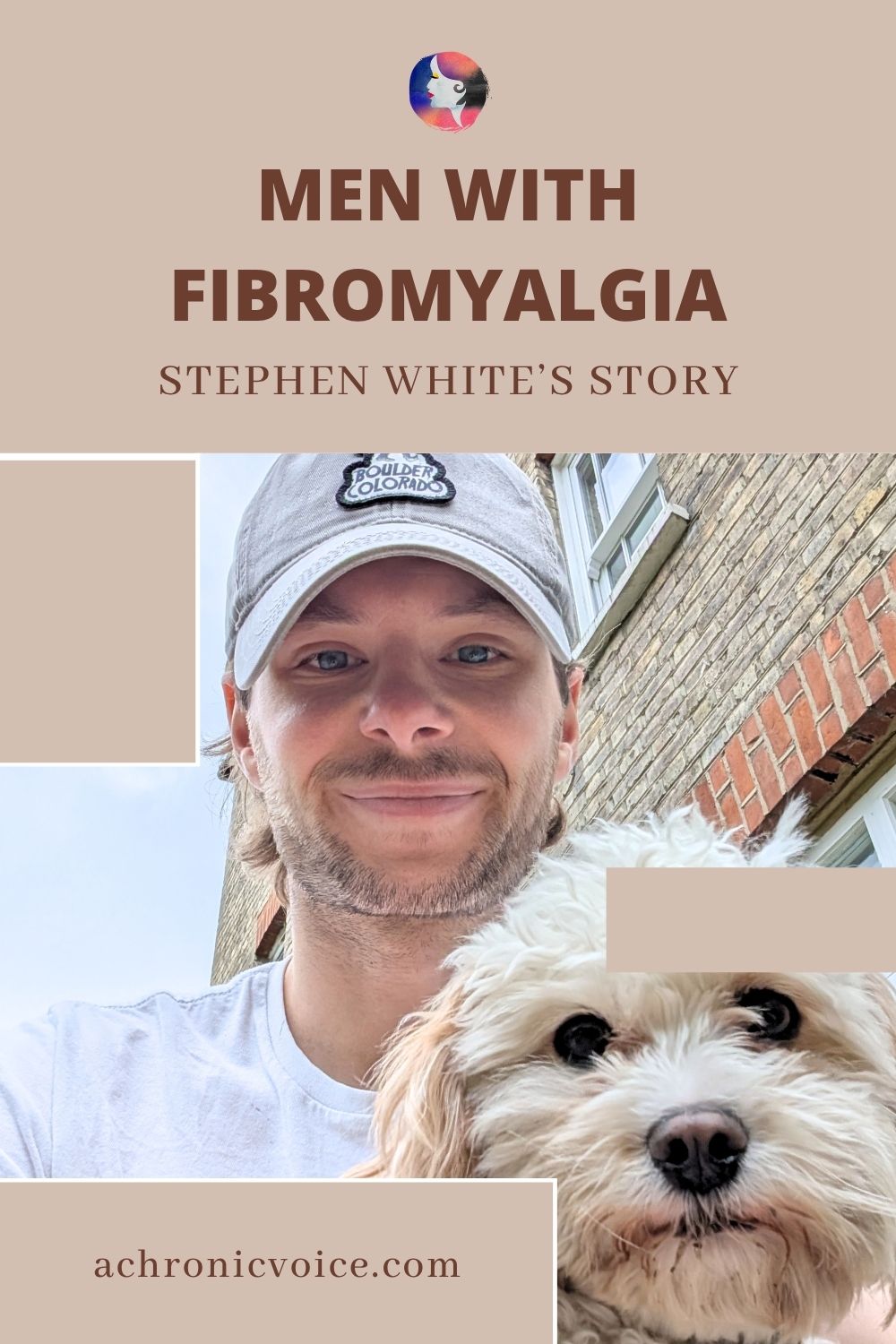
Men with Fibromyalgia — Stephen White’s Story
*Note from Sheryl of “A Chronic Voice”: I am happy to be able to share another male advocate’s story on the blog today (although obviously not happy that he is suffering from fibromyalgia). I truly believe that more male voices are needed when it comes to invisible illness, for the same reasons that Stephen White states within his own story below.
*Disclaimer: This article is meant for educational purposes, and is based on my personal experiences as a patient. I/We are not doctors, and nothing in this article should be substituted for medical advice. Please consult your own doctor before changing or adding any new treatment protocols. This post may also contain affiliate links. It will cost you nothing to click on them. I will get a small referral fee from purchases you make, which helps with the maintenance of this blog. Read our Privacy Policy page for more information. Thank you!
Pin to Your Men with Fibromyalgia Boards:
A Quick Look at What Fibromyalgia is
According to Choy et al. (2010), the mean time taken for a patient to be diagnosed with fibromyalgia was approximately 6.5 years from the onset of symptoms. Within that study of 800 patients, only 16% were men. This makes it a double whammy for men with fibromyalgia, as there is a two-fold stigma attached to it. From a clinical perspective, a doctor might dismiss the pain, as “men do not ‘really’ get chronic illness or fibromyalgia”. Within a societal narrative, men are often expected to be “strong and stoic” — pain is thus, frequently suppressed voluntarily, yet reluctantly.
What has Helped Me Through Any New Diagnosis
Personally, my own doctor has stated that I probably live with some 'baseline level of fibromyalgia', together with my autoimmune cocktail of Antiphospholipid Syndrome, Lupus, Sjögren's disease, and many other chronic illnesses and disabilities. Two things that have helped me through each of these diagnoses are medical research, and support from other patients (many who have become friends!). Meaning to say that knowledge paired with humanity becomes a powerful combination to help survive the relentlessness of chronic illnesses, and the pain they bring. If you are newly diagnosed with fibromyalgia, here are a few useful resources from official guidelines and websites:
- American College Of Rheumatology (ACR) — Preliminary Diagnostic Criteria For Fibromyalgia
- The American College of Rheumatology Preliminary Diagnostic Criteria for Fibromyalgia and Measurement of Symptom Severity (Wolfe et al., 2010)
- The Diagnosis Of Fibromyalgia Syndrome — UK Clinical Guidelines (Royal College of Physicians [RCP], 2022)
For now, I shall shut up, and hand over the page to Stephen!
Young, in Pain, but Undiagnosed
Though undiagnosed at the time, I’ve experienced fibromyalgia since the age of 21. It was January 2017 when my pain first started, just as I was returning to university after the Christmas holidays. I had six months left of my integrated master’s degree in Geology, and I felt extremely anxious to return. The end of my degree was in sight, and my mind was on my thesis constantly. Would I find a good job at the end of this?
Pin to Your Chronic Pain & Young Adult Boards:
The Chronic Pain that Brought Me to the A&E
In the beginning, I felt a strong, aching pain in my chest, and my heart rate was very high. I kept a close eye on the pain over the next couple of days, but it didn’t settle down. Naturally, the preoccupation over my health fed into anxious thoughts. It may seem overblown, but I genuinely thought I could be having a heart attack, or that something was seriously wrong with me.
And so, I asked if my housemate could drive me to the hospital. When I arrived, I was quickly triaged at the A&E, before they conducted an ECG scan. I waited nervously for the results in a hospital bed. However, after only an hour or so, I was told by a kind doctor that they could find no abnormalities, and that I was otherwise healthy. I was discharged and sent home, whilst feeling very confused.
The Addition of Chronic Fatigue
When I returned home from the hospital, I became more concerned about the chest pain over the next few days, as it hadn’t subsided. To my worry, fatigue began to accompany the pain, which then became chronic over weeks and months. This chronic fatigue was brutal. Within the span of a few weeks, I went from being a highly active 21-year-old, to barely being able to walk down the stairs. I was really scared, and had no idea what was happening to me.
The Identity Crisis & Accommodations Needed at School
I had to take a break from my degree to recover, and was unable to complete an environmental module that I had been really looking forward to. I remember having a meeting with my supervisor and the course organiser, to discuss how I could finish my studies for the year. I felt so dejected. I didn’t want the attention that this illness brought, and I really struggled to verbalise what I was experiencing.
I also felt a visceral sense of imposter syndrome. Up until the start of 2017, I had always been able to cope with whatever life threw at me. I was young, otherwise healthy, and wanted so desperately to just push through this period of ill health. This didn’t feel like the ‘normal’ me, and I didn’t want to take time out. I just wanted to complete my course the same way as the rest of my coursemates did.
However, it soon became apparent that I would need accommodations. With the extra time and flexibility they granted, I managed to complete my degree. Looking back, I’m not sure how I would have been able to complete my course without those adjustments.
My Brief Career in Exploration Geology
My health improved during the summer of my graduation, and I was gradually feeling more like my previous healthy self; only a few lingering pains could be felt here and there. I started a career in exploration geology, which was my dream job. It meant spending time in rural Türkiye, collecting metallurgical samples and mapping the geology of the area. There was a lot of travelling involved, but I was hoping the leftover pain would eventually resolve on its own.
My optimism didn’t quite go to plan. Months later, I had my first major pain flare-up. To cut a long story short, I had to quit my job as it was too physical for me.
The Physical, Emotional & Mental Toll of the Chronic Pain as a Young Adult
I needed support, so I moved back in with my family. They were big life changes, and it felt like all my independence had disappeared in an instant. The aftermath of the flare-up was messy, to put it lightly. I lost a lot of confidence in myself, and felt so angry, confused, and heartbroken.
It was so hard not to compare myself to my peers at the time, who had now either started their own careers or had taken time out to go travelling. For years, I had planned a career built for the outdoors, either in mineral exploration or environmental geology. These plans seemed impossible after my flare-up. Experiencing chronic pain completely flipped my life on its head, and I had no idea how I was going to navigate it.
The Struggles with Communicating My Pain as a Young Man with Fibromyalgia
As a young man, I struggled to communicate that I was having a really hard time with my health. I had always been told “the world is your oyster” at that age, but in truth, I felt more trapped by my circumstances than anything else.
My health became a real rollercoaster ride throughout my twenties, with hospital appointments, surgeries, and work-life balance to navigate. For the past nine years, I’ve had to deal with chronic fatigue and nerve pain, as well as the ups and downs in mental health.
With all the issues I had presented to the doctors over the years, they still couldn’t give me a complete diagnosis, as they didn’t know what was fully going on. There was always a baseline of chronic pain and anxiety, but I found it difficult to explain my symptoms, because they would come and go, and varied in intensity.
Pin to Your Communication & Men's Health Boards:
Finally Diagnosed with Fibromyalgia at 30
It wasn’t until I turned 30 last year that I was finally diagnosed with fibromyalgia — a condition that affects around 2.5 million people in the UK (University of Aberdeen, n.d.). The National Health Service [NHS] (2022) defines the condition as chronic, characterised by pain throughout the body. From my personal experience thus far, most people become concerned for me when they hear about my diagnosis.
Many of them are also surprised to see a male with a fibromyalgia diagnosis. This is because fibromyalgia disproportionately affects women more than men (80 – 96% of cases are found in women) (Ruschak et al., 2023). As a person who lives with fibromyalgia, I will also add that there is still a real lack of understanding in the medical community about the condition in itself. In addition, research has typically concentrated on women, due to the low percentage of men with fibromyalgia (Ruschak et al., 2023).
I often wonder if the smaller proportion of men with fibromyalgia is solely due to genetics, or also to do with how men behave in general. For instance, men tend to be very silent when it comes to invisible disabilities, and also their mental health.
Societal Expectations of Men
Societal norms typically dictate that men should be strong and be viewed as providers, usually in a familial context. It’s an expectation that I struggle to live up to; in fact, many of my male friends have told me that they feel the same way. ‘Masculine’ traits such as leadership, emotional detachment, and financial success have been drilled into us since we were little boys — by media, films, sports, culture — the list goes on.
With such an orchestrated backdrop, it’s no wonder that men struggle to open up when they face difficulties in life. When we do so, it feels like we’ve failed in some way, or that we have lost a part of our masculinity. For men with fibromyalgia, this sense of failure is compounded by everyday pain, which can lead to isolation, along with other mental health issues such as anxiety and depression (University of Aberdeen, n.d.).
The Need to Limit Activities I Love, Due to Chronic Pain from Fibromyalgia
One activity that I’ve always loved is exercise. Whether that’s walking, hiking, or going to the gym. Throughout my teenage years and early twenties, I ran cross-country events for my school and county, and played football with my university coursemates. I had even run a half-marathon eight months before the onset of my pain. Exercise had always featured heavily in my life.
Now, I need to be more mindful when I exercise. I need to be careful not to push myself to my limits, as doing so can have a knock-on effect on my pain levels the following day. Throw in work, general life duties such as cleaning and cooking, and it quickly becomes tricky to balance mentally. This is especially true when I’m experiencing chronic pain.
Men with Fibromyalgia & the Fitness and Achievement Clashes
We live in a culture focused on fitness and achievement, and that’s hard to live up to for men with fibromyalgia. I need to skip the gym on the days when I’m feeling really fatigued or in pain, which slows down any progress I have been building up in my workouts.
This is frustrating because I have fitness goals, but I’ve also learned to be more flexible with them due to my condition. I now know that if I am experiencing a flare-up, it’s more important that I look after my health, rather than “push through” the pain. Doing otherwise would only exacerbate the pain and exhaustion. Regardless, I still feel frustrated that it has to be this way.
Learning to Shift My Mindset as a Young Man with Fibromyalgia
I miss playing football and long-distance running. It becomes easy to compare myself to others who might be training for a marathon or reaching their gym goals, whilst I’m crashed out on the sofa. However, empathy and kindness are two traits that I’ve been working on for a while now. I have also been practising radical acceptance. Just because I’ve had to take a week off from going to the gym, that doesn’t mean I’m any less capable. It’s helpful to remind myself of all my good qualities, too.
Speaking of “pushing through” pain, men with fibromyalgia can often feel that they’re not tough enough if they don’t force themselves to carry on, despite their struggles. Sometimes, I think to myself, “who am I trying to prove myself to”? I’ve found this mindset shift to be incredibly helpful for challenging conditioned thoughts and behaviours that I may have.
I Want to Reach Out to Men Who Feel Stigmatised by Society
With all the challenges we face in our society today, I want to speak up on behalf of those with invisible disabilities, regardless of gender. However, I want to specifically reach out to men who feel stigmatised for speaking up about their struggles, and say that it’s okay to admit when you’re not feeling great. It’s healthy to express your emotions, and isn’t a sign of weakness.
When it comes to chronic pain, we wouldn’t expect someone with a broken leg to glide through the day or attend the office five days a week. The difference is that a broken leg is visible, whereas an invisible disability isn’t.
Speaking objectively, visibility brings a unique challenge of its own. Obviously, no one can read anyone else’s mind to know what they’re going through, but empathy and kindness can go a long way when we interact with our fellow humans. This is especially relevant when it comes to healthcare and the workplace.
The Changes I Believe We Need in Healthcare
In healthcare, we need to adopt a culture of trust when an individual presents long-term pain concerns. Just because the pain isn’t visible, it doesn’t mean it’s not real. I really do believe that western medicine needs to adapt to a changing world, and approach chronic pain with a holistic approach that is tailored to the individual. This means an approach that takes into consideration talking therapies, physical therapies and medications. A combination of all three is ideal, but should always be tailored to the individual.
This will take time and change is never easy, just like any facet within society. General practitioners and health professionals tend to only have 10 minutes per appointment; they are also seriously overworked in a pressurised system.
Speaking from my own experience as a man with fibromyalgia who has been through the medical system in the UK — a holistic approach has worked for me, and has helped me to live a much better life with an invisible disability. Unfortunately, I had to discover this approach by myself in my twenties. It took many years of self-study, reading, and pushing for referrals to relevant consultants. I don’t want others to go through what I did.
With the right foundations, I believe that it’s possible to change our outlook on chronic pain collectively as a society. Ideally, this should be guided by a top-down healthcare approach.
The Need for Awareness Within Shared Spaces
Public and workplace environments also need more education in regards to accommodations, and how to adapt to individuals accordingly. It takes brave individuals to speak up, and to educate others about the invisible conditions we live with. We can be a more inclusive society if we help those with invisible disabilities to feel more comfortable in our shared environments.
If you have any questions about chronic pain, fibromyalgia or are interested in learning more about my background, my DMs are always open.
All the best,
Stephen
Pin to Your Fibromyalgia & Men's Health Boards:
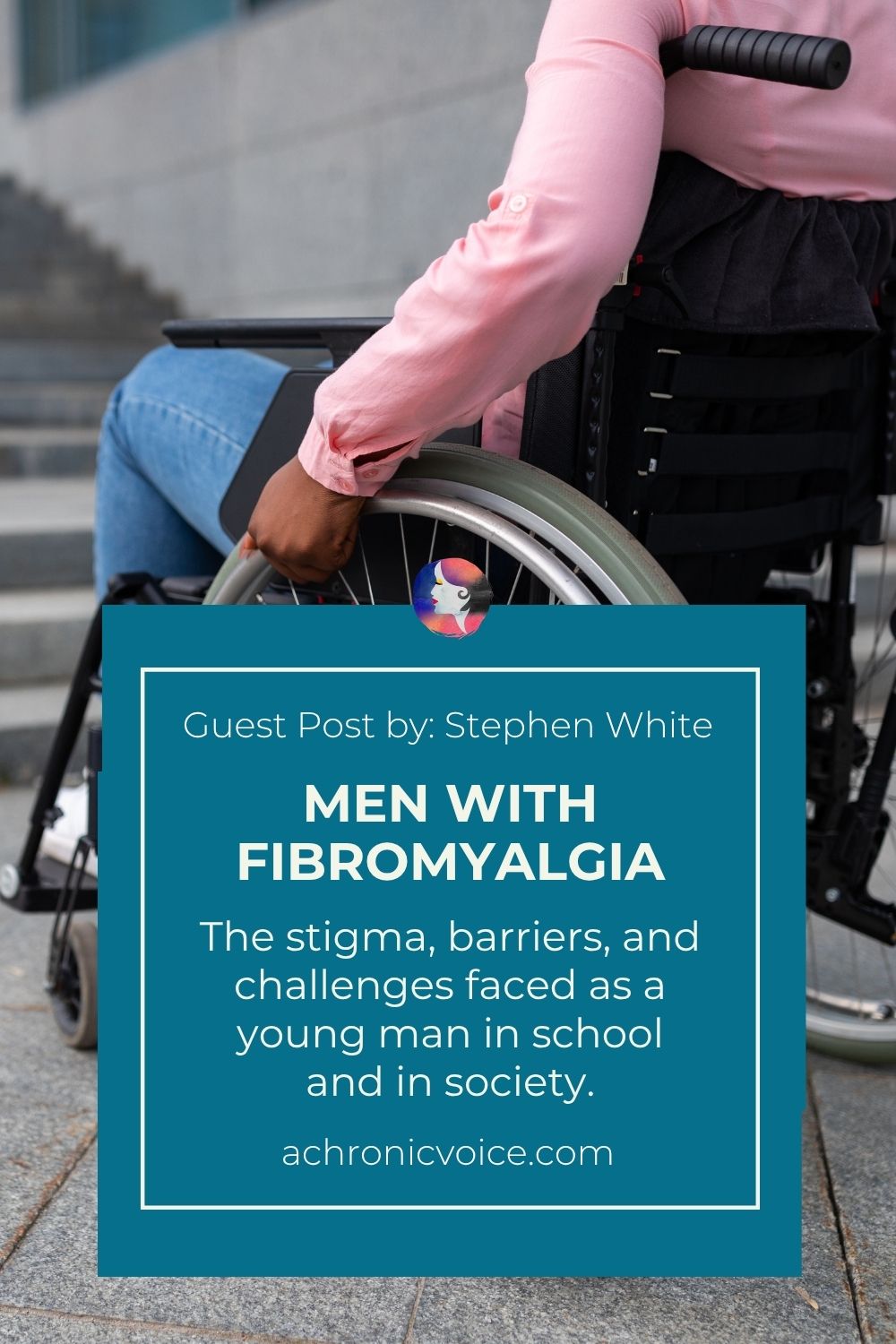
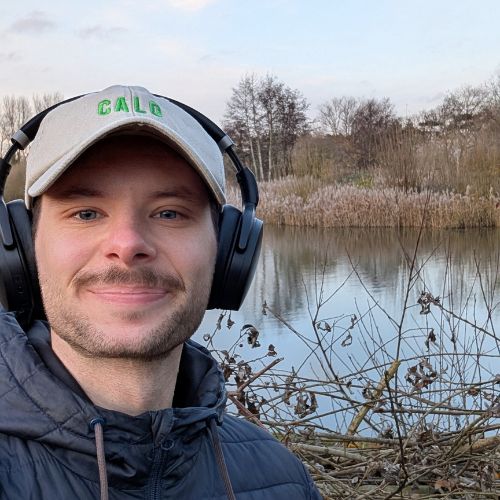
I’m 30 years old and live in London, UK. I love nature and try to get out of the city often! I play guitar and sing, previously in a band but I mostly play solo now. I love all things water sports — surfing, paddleboarding and swimming — so I tend to choose breaks by the sea. My background is in Geological Science, however, I’ve worked within the Climate Technology and Insurance industries since I graduated — either in carbon analysis or as a Natural Disaster Analyst. I’m passionate about learning more from climate change, but I also have a keen interest in genealogy and psychology — which both developed during my twenties. Researching family history has led to uncovering my Irish and Scottish roots, and I’m currently taking an Introduction to Counselling course to explore more about the potential routes to becoming a therapist. Here is my blog and Instagram account.
- Choy, E., Perrot, S., Leon, T., Kaplan, J., Petersel, D., Ginovker, A., & Kramer, E. (2010). A patient survey of the impact of fibromyalgia and the journey to diagnosis. BMC Health Services Research, 10(1), 102. https://doi.org/10.1186/1472-6963-10-102
- National Health Services. (2022, October 12). Fibromyalgia. https://www.nhs.uk/conditions/fibromyalgia/
- Royal College of Physicians. (2022). The diagnosis of fibromyalgia syndrome: UK clinical guidelines. https://www.rcp.ac.uk/media/udlhnt1b/the-diagnosis-of-fibromyalgia-syndrome-guidelines_1_2_0.pdf
- Ruschak, I., Montesó-Curto, P., Rosselló, L., Aguilar Martín, C., Sánchez-Montesó, L., & Toussaint, L. (2023). Fibromyalgia syndrome pain in men and women: A scoping review. Healthcare, 11(2), 223. https://doi.org/10.3390/healthcare11020223
- University of Aberdeen. (n.d.). UK healthcare services for people with fibromyalgia. The Institute of Applied Health Sciences. Retrieved 9 May 2026, from https://www.abdn.ac.uk/iahs/academic/epidemiology/our-research/plain-language-summaries/fibromyalgia-healthcare/
- Wolfe, F., Clauw, D. J., Fitzcharles, M.-A., Goldenberg, D. L., Katz, R. S., Mease, P., Russell, A. S., Russell, I. J., Winfield, J. B., & Yunus, M. B. (2010). The American College of Rheumatology Preliminary Diagnostic Criteria for Fibromyalgia and Measurement of Symptom Severity. Arthritis Care & Research, 62(5), 600–610. https://doi.org/10.1002/acr.20140
Member comments