*Note from Sheryl of A Chronic Voice: What is "art", really? A quick search yields a few similar dictionary definitions:
"The making of objects, images, music, etc. that are beautiful or that express feelings". (Cambridge)
"Skill acquired by experience, study, or observation". (Merriam Webster)
Many people tend to associate 'art' with Picasso, Rembrandt or some other museum-worthy painting. Either that or a starving artist with 'no real job'. Yet we often miss the other dimensions of art, even within dictionary definitions — such as being a medium for expression, as well as mastery of a skill. In that sense, anything within any field can be honed into an artform.
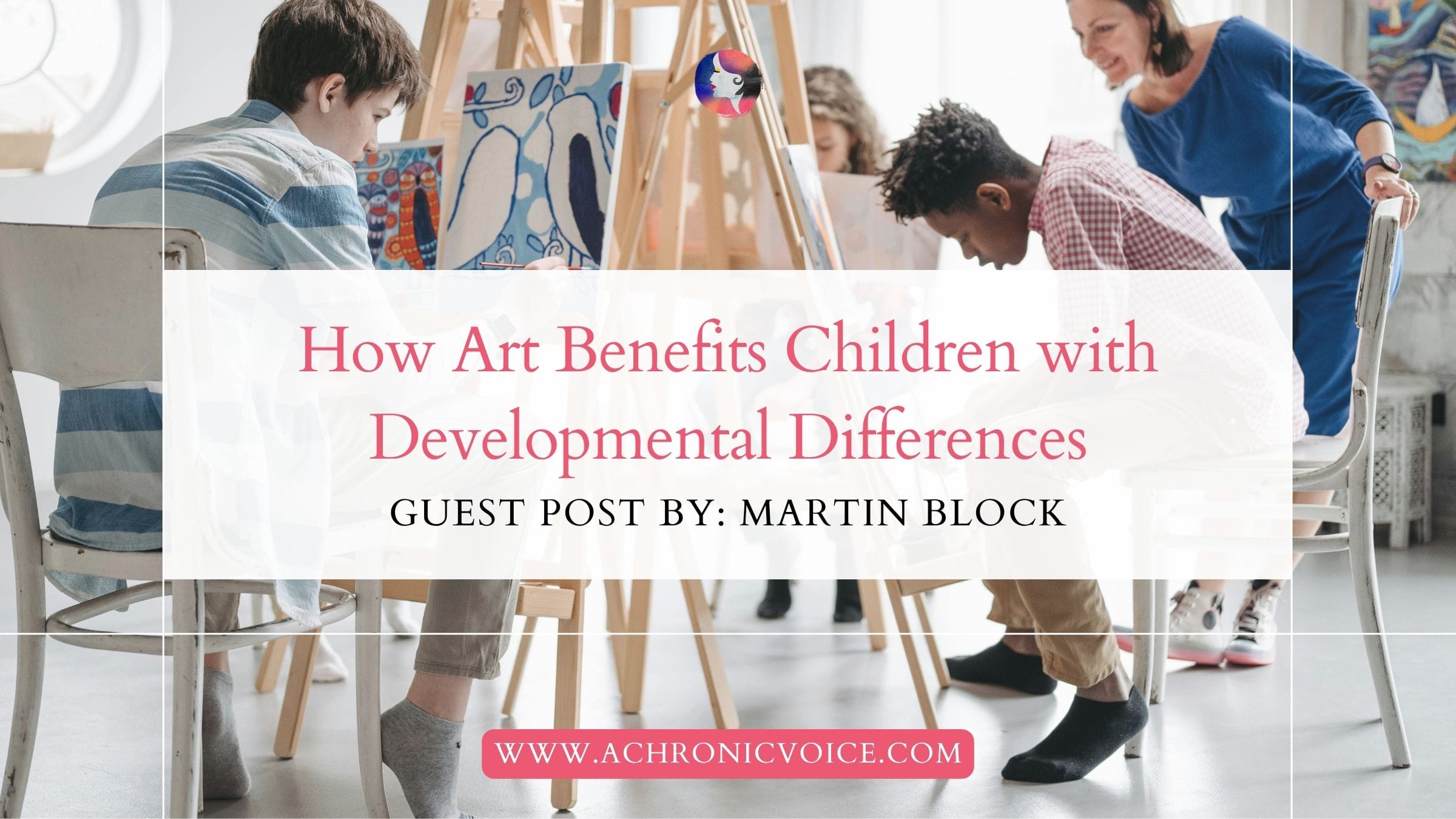
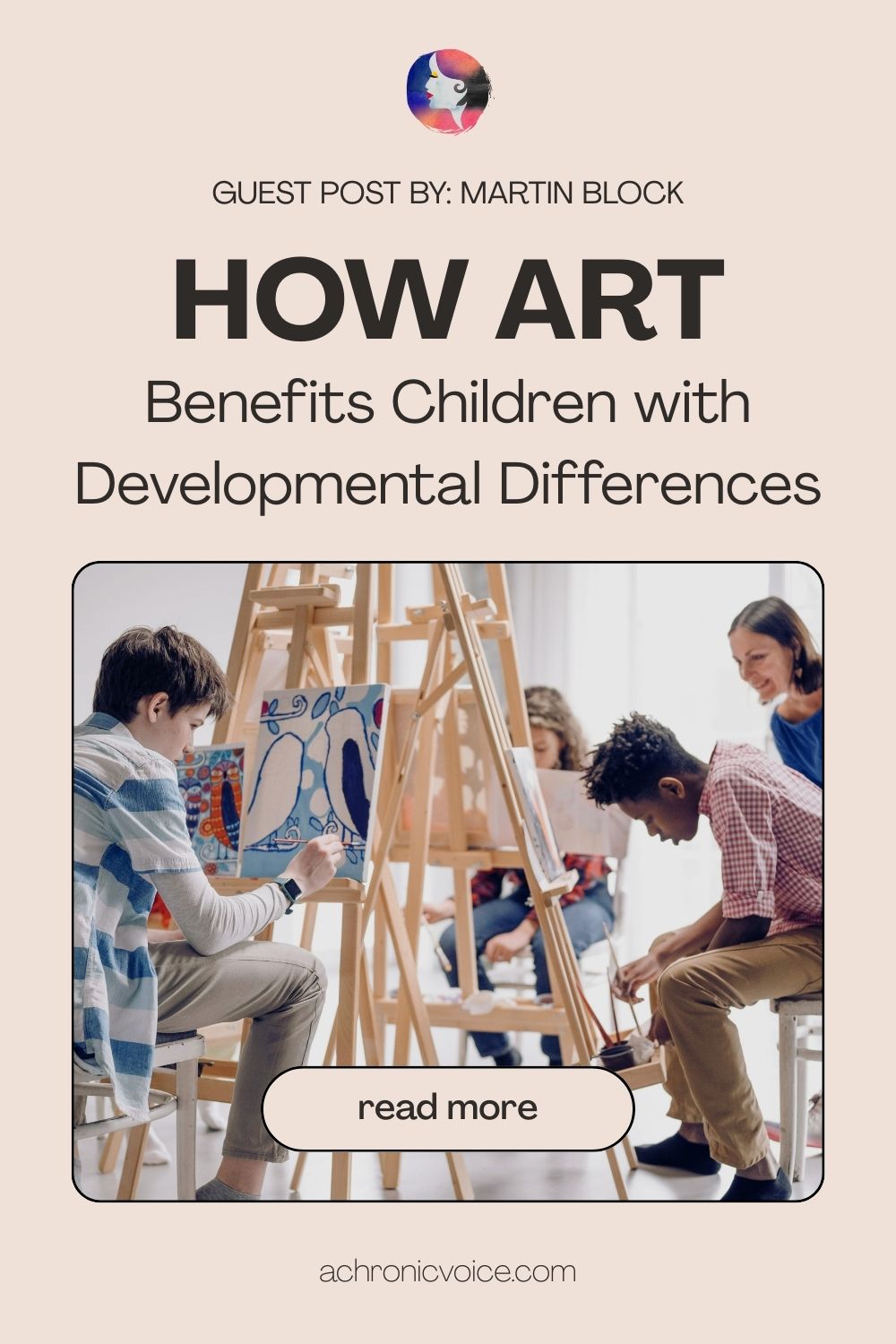
In this post, Martin Block shares more about art forms, and how they can benefit children with various developmental differences. Shall we dive in? 🙂
*Disclaimer: This article is meant for educational purposes, and is based on my personal experiences as a patient. I am not a doctor, and nothing in this article should be substituted for medical advice. Please consult your own doctor before changing or adding any new treatment protocols. This post may also contain affiliate links. It will cost you nothing to click on them. I will get a small referral fee from purchases you make, which helps with the maintenance of this blog. Read our Privacy Policy page for more information. Thank you!
Pin to Your Parenting & Development Differences Boards:
The Beginnings of Connection, on Terms Your Child Understands
Sometimes a child hums before they speak. Sometimes they tap, fold, line things up. And it's not random. It's not empty behavior. It's not something to redirect. It's a sign — something’s working. Something’s flowing.
The arts don’t always arrive in brushes or songs. They arrive in patterns, gestures, sounds. Wherever that shows up, it’s worth following. Especially when language is slow to come. Especially when attention is scattered. That’s where the connection begins.
Art Creates Safe Places Where Emotions Can Land
Kids who don’t speak much — or who echo — still feel everything. Strongly. Loudly. Sometimes all at once. And if there’s nowhere to put it? That’s when things explode. Or shut down. But give them shape. Give them color. A surface. A place to push. And it changes.
Programs that layer creative expression into emotional development are proving that regulation doesn’t have to start with words (Birrell et al., 2025). It can start with hands. With movement. With space. The point isn’t to create something good. It’s to let the noise settle.
Turn Mess Into Meaning Together as a Family
A lot of families start with a corner of a table. Then maybe a shelf. Then maybe a kitchen cupboard full of projects no one can throw out. Sometimes it’s not even about the child. Sometimes a parent’s the one who draws first. Sometimes it turns into something more.
There are now families building small businesses around their shared creativity — not for money, but for rhythm. If you’ve ever thought about shaping your own passion for art into something that supports connection and identity, this is the lane. It doesn’t have to scale. It just has to mean something.
Speech is Not the Only Form of Communication
Not every child who needs to speak can do it through the mouth — not right away, at least. But give them texture. Tools. A beat. A pattern to repeat. And suddenly, there’s language — just not the kind people expect.
It comes out in spirals. In rows. In tracing. In stopping halfway through and doing it all again. Arts programs focused on children with speech or communication blocks show that meaning doesn’t need a sentence to be real (Léger-Goodes et al., 2024). It just needs a form.
The Body Learns by Doing — Let Kids Play with Their Hands
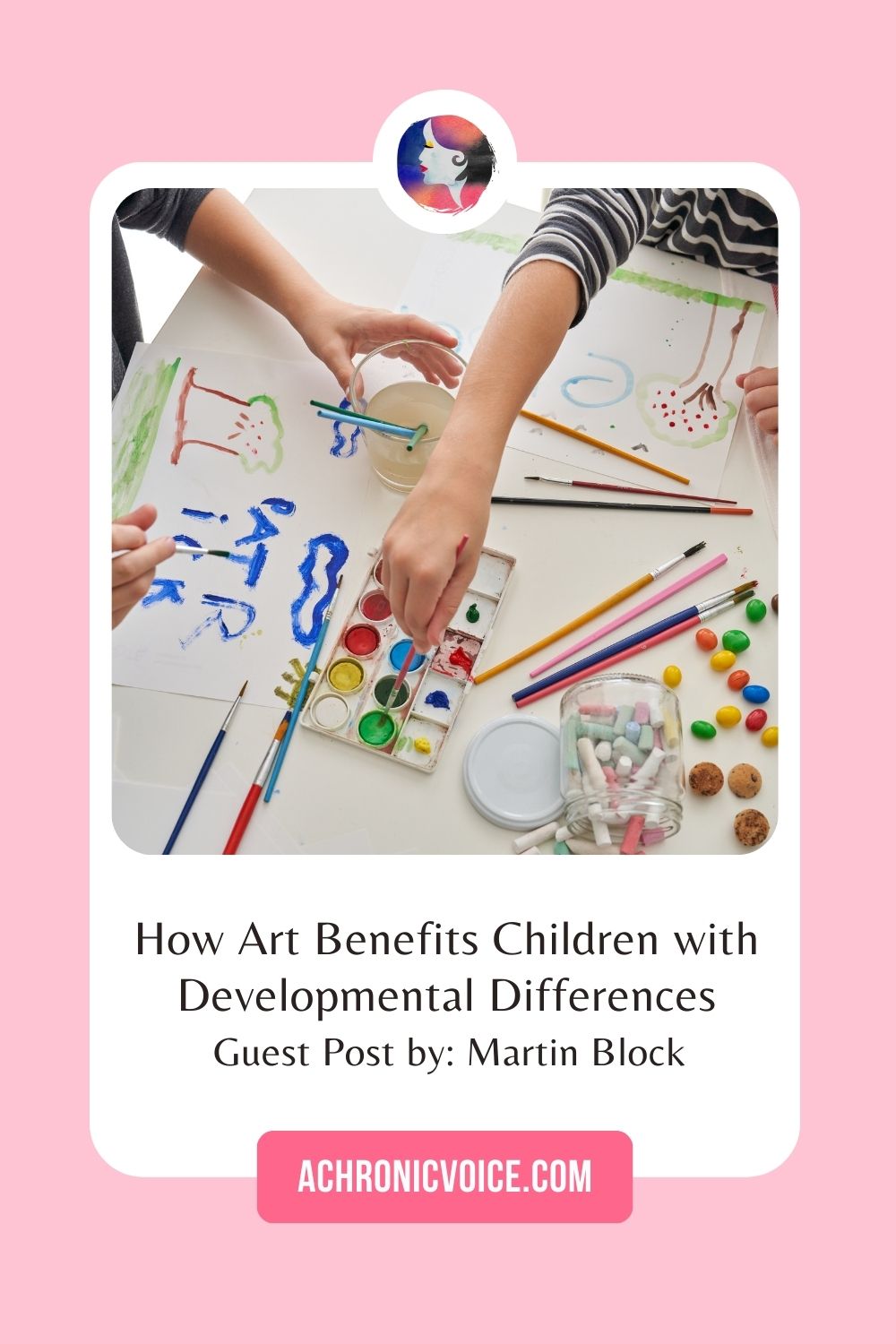
Paint is messy. Clay is unpredictable. Collage sticks to everything. That’s the point. Because to do those things, the hands have to work together. The arms have to reach. The eyes have to track.
For children with developmental differences such as motor delays, this is training disguised as play. A lot of formal therapies miss this. They isolate the movement, forget the joy. But art-based motor workshops flip that. They let kids build strength without knowing they’re building anything at all. Which, ironically, is when the most happens.
Transformation & Inclusion Through Art, Where Every Child Matters
You can be in the same room and still miss each other, especially when a child doesn’t follow back-and-forth the way others do. So instead of conversation, there’s shape. There’s rhythm. There’s making.
That’s where real inclusion shows up — not in policy, but in practice. It looks like a kid with one sound on loop building something next to another who speaks five languages. It looks like group art sessions that aren’t about skill, but about showing up. UNICEF’s own reporting on arts-driven cultural inclusion initiatives offers global examples. What do they have in common? No one’s expected to act “typical.”
“These programmes can play a transformative role in promoting social inclusion by encouraging children to actively participate alongside one another. For children with disabilities in particular, these activities provide a space to build self-esteem, improve communication and foster a sense of belonging in group settings.” (UNICEF, 2025)
The Gaps in the Education System for Children with Development Differences
Some schools still keep arts on Fridays — optional, ungraded, squeezed into the end of the week. Others have figured it out. That learning isn’t just input and recall. It’s rhythm. Sequence. Motion. Flow. And for neurodivergent kids, it’s often the only door that stays open.
International pushes for arts-first learning models are changing what counts as intelligence. Kids who can’t hold a pencil “correctly” are composing. Kids who stim through dance are choreographing without knowing it. Schools are slow to shift. But families don’t have to wait.
Filling in the Gaps with Initiatives & Communities
In many places, disabled artists don’t get gallery shows. Or press. Or awards. So they build their own rooms. Their own stages. Sometimes it’s digital. Sometimes it’s hyperlocal. Doesn’t matter. What matters is that there are now entire networks devoted to making space.
One example — this hub for global arts initiatives — curates programs where disabled children, teens, adults can show their work, get support, and be part of a culture that sees them as contributors, not just participants. It’s not therapy. It's a community.
Take the Time to Notice & Provide Validation
This isn’t about unlocking potential. It’s about letting it run. Art doesn’t need to be framed to matter. A drawing doesn’t need to be praised to count. Not every moment needs to be labeled “progress.” Some things are just good. Because they are. Because a child made them. Because a parent paused long enough to notice. That’s enough.
Pin to Your Children with Developmental Differences & Disabilities Boards:
- Birrell, L., Barrett, E., Oliver, E., Nguyen, A., Ewing, R., Anderson, M., & Teesson, M. (2025). The impact of arts-inclusive programs on young children’s mental health and wellbeing: A rapid review. Arts & Health, 17(3), 185–207.https://doi.org/10.1080/17533015.2024.2319032
- Léger-Goodes, T., Herba, C. M., Moula, Z., Mendrek, A., Hurtubise, K., Piché, J., Gilbert, M., Bernier, M., Simons, K., Bélanger, N., Smith, J., & Malboeuf-Hurtubise, C. (2024). Feasibility, acceptability, and perceived benefits of a creative arts intervention for elementary school children living with speech, language and communication disorders. Frontiers in Child and Adolescent Psychiatry, 3. https://doi.org/10.3389/frcha.2024.1322860
- UNICEF Innocenti – Global Office of Research and Foresight. (2025). A systematic review on children with disabilities: Arts and culture for inclusion. United Nations Children’s Fund. https://www.unicef.org/innocenti/media/10856/file/UNICEF-Innocenti-Disabilities-Arts-Culture-Report-2025.pdf
References:

Martin Block is the co-founder of Able Rise and an advocate for digital accessibility and inclusive design. With a background in web development, he focuses on building practical tools that empower the disability community and bridge gaps in societal support. Through Able Rise, Martin aims to create compassionate, technology-driven solutions rooted in lived experience.

Member comments